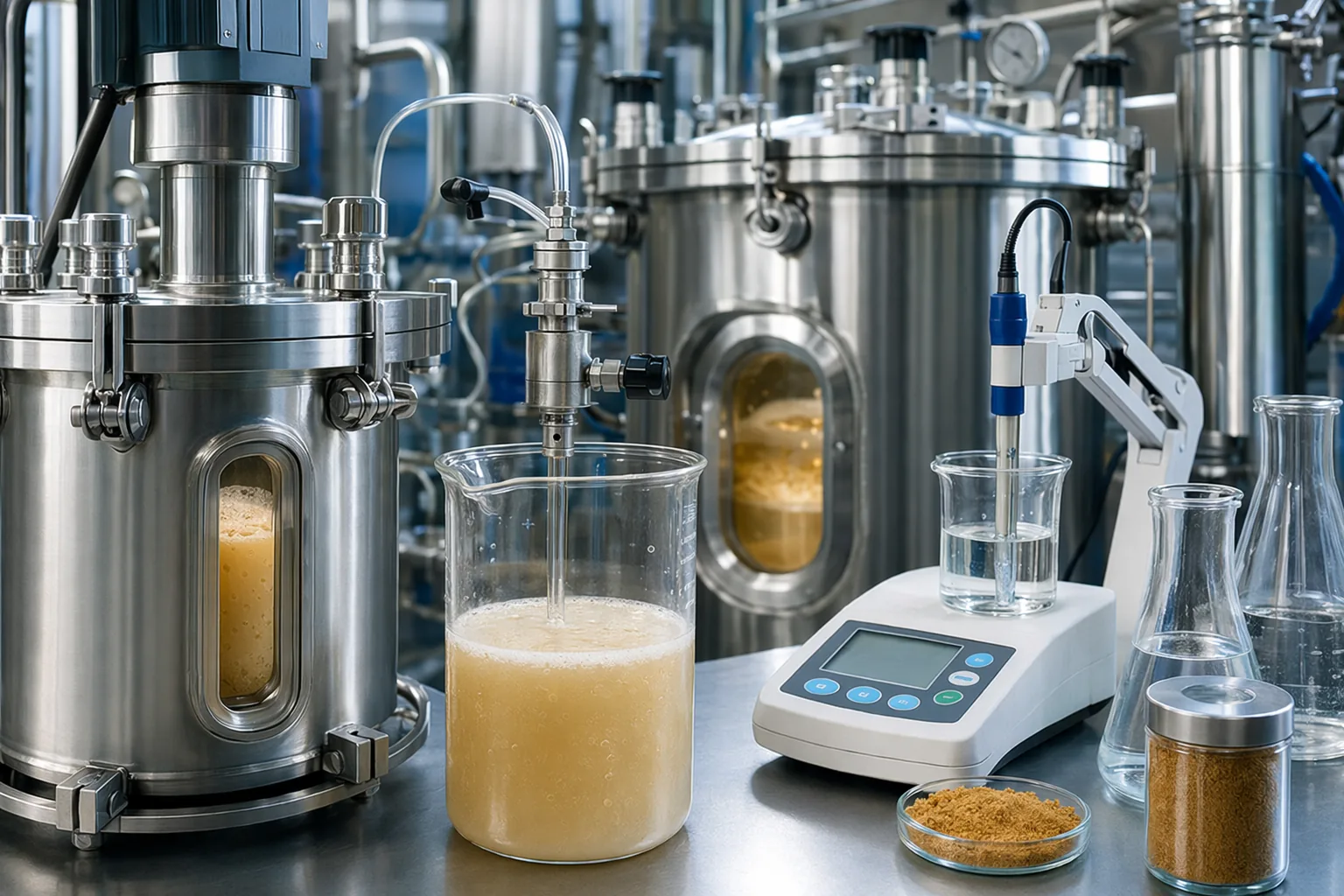
Pepsin Enzyme Powder In Aliexpress: Pepsin Supplier Guide for Protein Hydrolysis
Compare marketplace offers with supplier qualification, COA/TDS/SDS review, pilot testing, and cost-in-use for pepsin protein hydrolysis.
Industrial buyers comparing online marketplace listings with direct pepsin suppliers need more than a low unit price. Use this guide to specify activity, process fit, documentation, and validation before purchasing pepsin enzyme powder for protein hydrolysis.
Why Marketplace Searches Need Industrial Qualification
Many buyers search for pepsin enzyme powder in aliexpress when benchmarking prices or looking for small trial quantities. That can be useful for early market scanning, but industrial protein hydrolysis requires deeper qualification than a product photo and a generic activity claim. Pepsin enzyme performance depends on activity method, substrate specificity, pH control, temperature, particle size, moisture, and storage history. A low-cost listing may become expensive if dosage must be increased, hydrolysis time extends, or batches vary. For B2B purchasing, treat any marketplace result as a starting point, then request technical documents, lot samples, and written confirmation of origin and specifications. A qualified pepsin supplier should help translate activity units into your process conditions and support pilot validation before scale-up. This is especially important for food, collagen, peptide, and fermentation-related hydrolysate operations where repeatability affects yield, filtration, flavor, and downstream processing.
Do not qualify pepsin enzyme powder by price alone. • Confirm activity method and substrate used for assay. • Request sample lots before production purchase. • Evaluate supplier communication speed and technical depth.
Pepsin Enzyme Function in Protein Hydrolysis
Is pepsin an enzyme? Yes. Pepsin is an aspartic protease that works best under acidic conditions and cleaves peptide bonds in proteins. In simple terms, the enzyme pepsin digests protein into smaller peptides, which can improve extraction, solubilization, or downstream functional properties depending on the raw material. The substrate of enzyme pepsin is typically a proteinaceous material such as gelatin, collagen, casein, hemoglobin, fish protein, meat protein, or plant protein isolates that have been adjusted to an acidic pH. The ideal pepsin enzyme substrate depends on the intended hydrolysate profile and process economics. In industrial protein hydrolysis, pepsin enzyme function is controlled by pH, temperature, enzyme-to-substrate ratio, residence time, agitation, and inactivation strategy. Buyers should define target degree of hydrolysis, viscosity reduction, soluble nitrogen, peptide size distribution, and sensory or filtration requirements before selecting a grade.
Main function: acidic proteolysis of proteins. • Common substrates: collagen, gelatin, casein, and animal or fish proteins. • Key outputs: peptide profile, yield, viscosity, and solubility. • Process control is required for repeatable hydrolysis.
Typical Process Conditions for Industrial Trials
Pepsin enzyme powder is commonly evaluated in acidic hydrolysis systems at pH 1.5 to 3.5, with many protein hydrolysis trials starting around pH 2.0 to 3.0. Practical operating temperatures often fall between 37°C and 45°C, although the best point depends on substrate, enzyme grade, and residence time. Some processes may test up to about 50°C, but higher temperatures can reduce enzyme stability and should be validated. Initial dosage screening may begin around 0.1% to 1.0% enzyme powder on protein or dry substrate basis, then expand to lower or higher bands based on activity units and hydrolysis targets. Reaction times may range from 1 to 8 hours in lab trials. Enzyme inactivation is typically achieved by pH shift, heat treatment, or both, but the final method must fit downstream product quality and regulatory requirements. Always run controls without enzyme to measure true enzymatic contribution.
Starting pH: commonly 2.0 to 3.0 for trials. • Typical temperature: 37°C to 45°C. • Screen dosage by activity, not only powder weight. • Use blank controls and time-course sampling.
Documents to Request Before Purchasing
A serious pepsin supplier should provide a current COA for the offered lot, a TDS describing activity, appearance, recommended use, storage, and handling, plus an SDS covering safe industrial handling. The COA should state activity units and test method, moisture, appearance, and microbiological limits where relevant. Depending on application, buyers may also request heavy metal data, mesh size or particle size, ash, loss on drying, solubility, pH profile, and animal-origin information for porcine pepsin. For food or feed applications, confirm that the supplier can provide the statements required by your internal compliance team and local regulations. Avoid assuming that one activity unit system equals another; pepsin assays can vary by substrate and endpoint. If a listing uses vague terms such as high activity without a method, ask for clarification before ordering. Documentation quality is often a reliable indicator of supplier maturity.
COA: lot-specific quality and activity data. • TDS: use guidance and technical specifications. • SDS: safe handling, storage, and hazard information. • Origin statements may be needed for porcine pepsin.
Pilot Validation and Cost-in-Use
Cost-in-use is the right metric for pepsin enzyme purchasing. A lower price per kilogram may not reduce production cost if the enzyme has lower effective activity, poor solubility, slow reaction kinetics, or inconsistent lots. During pilot validation, compare suppliers at equal activity contribution where possible, not equal powder weight. Track hydrolysis time, degree of hydrolysis, soluble protein yield, viscosity reduction, filtration rate, downstream losses, odor or flavor impact, and inactivation efficiency. For collagen extraction, monitor extraction yield, gel strength or molecular profile as applicable, and impurity carryover. For cheese-related use, confirm that the grade and activity profile match the intended process and do not create uncontrolled proteolysis. Build a small design of experiments around pH, temperature, dosage, and time, then calculate enzyme cost per kilogram of usable hydrolysate or extracted protein. This approach protects production margins better than spot-buy pricing.
Compare at equivalent activity input. • Measure yield, time, filtration, and quality impact. • Calculate cost per usable hydrolysate output. • Confirm lot consistency before scale-up.
How to Qualify a Pepsin Supplier
Supplier qualification should combine technical, quality, commercial, and logistics checks. Start with a specification sheet that defines activity method, acceptable activity range, moisture limit, appearance, microbiology, packaging size, storage conditions, and shelf life. Ask whether the supplier can support repeat lots with traceable batch numbers and consistent documentation. Evaluate responsiveness to technical questions, willingness to provide samples, clarity on lead time, and ability to handle export documents if required. For porcine pepsin, confirm source material declarations and any application-specific restrictions before purchase. Industrial buyers should also assess packaging integrity, cold-chain or cool-storage needs where relevant, and humidity protection during transit. A good supplier will not simply quote pepsin enzyme powder; they will help match enzyme pepsin grade to your protein hydrolysis objective, provide practical trial guidance, and support reordering with stable quality expectations.
Define a written purchasing specification. • Check traceability and lot documentation. • Confirm packaging, storage, and transit controls. • Assess technical support before committing volume.
Technical Buying Checklist
Buyer Questions
Yes. Pepsin is an enzyme classified as an acidic protease. In industrial use, it hydrolyzes proteins into smaller peptides under low-pH conditions. Buyers use pepsin enzyme for applications such as protein hydrolysis, collagen extraction, and selected dairy processes. The right grade should be selected by activity method, substrate performance, documentation, and pilot results rather than powder price alone.
The enzyme pepsin digests protein substrates by cleaving peptide bonds under acidic conditions. Typical industrial substrates include collagen, gelatin, casein, fish protein, meat protein, and other protein-rich raw materials. The substrate of enzyme pepsin should be preconditioned for pH, temperature, solids level, and mixing so that the enzyme can contact the protein efficiently and produce repeatable hydrolysis results.
Request a lot-specific COA, a technical data sheet, and an SDS before purchasing. The COA should identify activity units and test method, appearance, moisture, and relevant microbiology or contaminant checks. The TDS should describe recommended use, storage, shelf life, and handling. For porcine pepsin, ask for animal-origin information and any statements needed by your compliance or customer approval process.
Compare offers by cost-in-use, not only price per kilogram. Test each pepsin enzyme powder at equivalent activity input where possible and measure hydrolysis time, yield, peptide profile, viscosity, filtration, and downstream quality. Also evaluate lot consistency, documentation quality, supplier responsiveness, packaging, storage requirements, and lead time. A slightly higher unit price can be more economical if performance is stronger and more consistent.
For protein hydrolysis trials, many teams start at pH 2.0 to 3.0 and 37°C to 45°C, then adjust based on substrate and target degree of hydrolysis. A practical first dosage screen may test about 0.1% to 1.0% enzyme powder on protein or dry substrate basis. Include no-enzyme controls, time-course samples, and a defined inactivation step to support scale-up decisions.
Related Search Themes
pepsin enzyme, is pepsin an enzyme, the enzyme pepsin digests, substrate of enzyme pepsin, pepsin enzyme substrate, enzyme pepsin
Pepsin for Research & Industry
Need Pepsin for your lab or production process?
ISO 9001 certified · Food-grade & research-grade · Ships to 80+ countries
Frequently Asked Questions
Is pepsin an enzyme used for industrial protein hydrolysis?
Yes. Pepsin is an enzyme classified as an acidic protease. In industrial use, it hydrolyzes proteins into smaller peptides under low-pH conditions. Buyers use pepsin enzyme for applications such as protein hydrolysis, collagen extraction, and selected dairy processes. The right grade should be selected by activity method, substrate performance, documentation, and pilot results rather than powder price alone.
What does the enzyme pepsin digest in a hydrolysis process?
The enzyme pepsin digests protein substrates by cleaving peptide bonds under acidic conditions. Typical industrial substrates include collagen, gelatin, casein, fish protein, meat protein, and other protein-rich raw materials. The substrate of enzyme pepsin should be preconditioned for pH, temperature, solids level, and mixing so that the enzyme can contact the protein efficiently and produce repeatable hydrolysis results.
What documents should I request from a pepsin supplier?
Request a lot-specific COA, a technical data sheet, and an SDS before purchasing. The COA should identify activity units and test method, appearance, moisture, and relevant microbiology or contaminant checks. The TDS should describe recommended use, storage, shelf life, and handling. For porcine pepsin, ask for animal-origin information and any statements needed by your compliance or customer approval process.
How should I compare pepsin enzyme powder offers?
Compare offers by cost-in-use, not only price per kilogram. Test each pepsin enzyme powder at equivalent activity input where possible and measure hydrolysis time, yield, peptide profile, viscosity, filtration, and downstream quality. Also evaluate lot consistency, documentation quality, supplier responsiveness, packaging, storage requirements, and lead time. A slightly higher unit price can be more economical if performance is stronger and more consistent.
What are typical starting conditions for pepsin enzyme trials?
For protein hydrolysis trials, many teams start at pH 2.0 to 3.0 and 37°C to 45°C, then adjust based on substrate and target degree of hydrolysis. A practical first dosage screen may test about 0.1% to 1.0% enzyme powder on protein or dry substrate basis. Include no-enzyme controls, time-course samples, and a defined inactivation step to support scale-up decisions.
Related: Pepsin Enzyme Substrate & Function
Turn This Guide Into a Supplier Brief Request pepsin enzyme specifications, samples, and technical support for your protein hydrolysis trial. See our application page for Pepsin Enzyme Substrate & Function at /applications/pepsin-enzyme-substrate-function/ for specs, MOQ, and a free 50 g sample.
Contact Us to Contribute