Pepsin Enzyme for Cheese Purchase: Specification Checklist for Cheese
Compare pepsin enzyme specs for cheese: activity, pH, dosage, COA/TDS/SDS, pilot validation, cost-in-use, and supplier qualification.
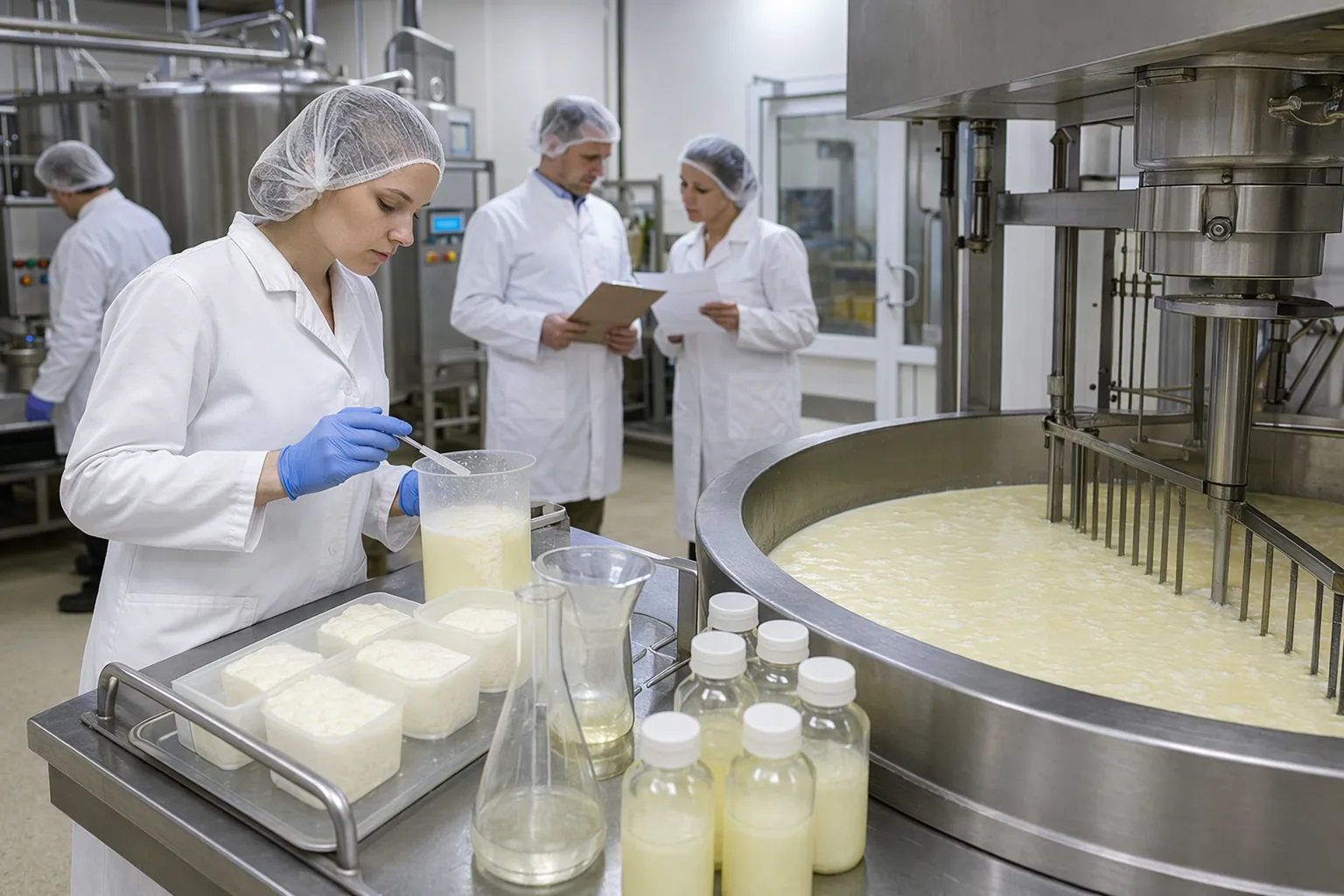
For cheese manufacturers, pepsin selection is not just a price comparison. The right pepsin enzyme must match milk type, coagulation target, flavor profile, documentation requirements, and total cost-in-use. Send your milk type, cheese style, quantity and destination, and we quote the grade.
What Cheese Buyers Should Compare Before Purchasing Pepsin
A pepsin enzyme for cheese purchase should start with application fit, not only activity units. Pepsin is an acidic protease, commonly sourced from porcine gastric material, and it can contribute milk-coagulating activity as well as broader protein hydrolysis. In cheese, this balance matters because excessive proteolysis may affect curd strength, moisture retention, bitterness, and flavor development during ripening. Buyers comparing pepsin enzyme options should ask whether the product is intended for direct cheese coagulation, use in blends, or controlled protein modification. The same declared activity can perform differently depending on milk composition, pH, calcium balance, heat treatment, and make procedure. A qualified supplier should help translate specification data into process trials, including set time, cut firmness, curd fines, whey clarity, and finished cheese sensory checks. This is especially important when switching from animal rennet, microbial coagulant, or a previous pepsin lot.
Confirm source: porcine pepsin, blended coagulant, or other origin. • Compare milk-coagulating activity and non-specific proteolysis. • Assess suitability for fresh, semi-hard, hard, or ripened cheese. • Check if the product is liquid, powder, granular, or stabilized preparation.
Process Conditions: pH, Temperature, and Dosage Bands
Pepsin is most active under acidic conditions, with proteolytic activity often strongest around pH 1.5–3.5, while cheese milk coagulation is typically performed nearer pH 6.2–6.7 depending on cheese style and starter development. This difference is why pilot validation is essential. In many cheese processes, coagulation temperatures fall around 30–35°C, while higher temperatures can change enzyme activity, curd setting, and moisture behavior. Dosage should be based on declared milk-coagulating units, supplier recommendation, and vat trial results. As a practical screening approach, compare 0.5x, 1.0x, and 1.5x of the recommended dose. For liquid coagulant-style preparations, pilot trials often bracket 15–40 mL per 100 L milk, but this must be adjusted to the supplier’s activity specification. Powder dosage should never be copied between products without unit conversion, because activity concentration can vary widely.
Typical cheese milk pH: about 6.2–6.7 before coagulation. • Typical coagulation temperature: about 30–35°C. • Trial dose brackets: 0.5x, 1.0x, and 1.5x supplier guidance. • Record flocculation time, cut time, curd firmness, and pH at cutting.
Specification Checklist for COA, TDS, and SDS Review
Before approving a pepsin enzyme supplier for cheese, request documents for each commercial product and representative lot. The COA should state batch number, activity result, test method reference, appearance, microbiological limits when applicable, and release date. The TDS should describe enzyme type, source, carrier or formulation, recommended use range, pH and temperature guidance, storage conditions, shelf life, and handling precautions. The SDS should cover safe handling, dust or aerosol precautions for powders, spill response, and transport classification where relevant. For food manufacturing, buyers should also request origin statements, allergen information, residual processing aid guidance, and traceability documentation suitable for internal supplier approval. Avoid vague specifications such as “high activity” without a defined assay. If comparing enzyme pepsin products, insist on comparable units or supplier-assisted conversion to a common milk-coagulating or application-performance basis.
COA: lot activity, method, microbiology, appearance, release data. • TDS: source, formulation, application range, pH, temperature, storage. • SDS: handling, exposure control, spills, transport, disposal. • Traceability: lot coding, origin declaration, and shelf-life controls.
Pilot Validation for Yield, Flavor, and Cost-in-Use
Cost-in-use is the right comparison metric for pepsin enzyme for cheese, because the cheapest kilogram or liter may increase yield loss or flavor defects. Run side-by-side pilot vats using the same milk, starter, calcium addition, temperature profile, and cut schedule. Track set time, cutting firmness, curd particle uniformity, fines in whey, fat and protein losses, cheese moisture, salt uptake, pH curve, yield, and ripening performance. For aged cheese, evaluate bitterness, texture breakdown, and flavor intensity at relevant storage intervals. Pepsin hydrolyzes protein substrates, so the substrate of enzyme pepsin in cheese systems includes casein fractions that influence coagulation and ripening. A supplier comparison should therefore include both immediate vat performance and finished cheese quality. Calculate cost per metric ton of cheese, not only cost per dose, and include rejected batches, rework, cleaning impact, and inventory shelf life.
Use the same milk lot where possible for comparison trials. • Measure yield and whey composition, not only set time. • Include sensory review for bitterness and texture changes. • Calculate enzyme cost per finished cheese output.
Supplier Qualification and Commercial Purchasing Criteria
A reliable pepsin supplier should support technical evaluation, documentation review, and repeatable supply. For industrial cheese buyers, supplier qualification normally includes sample availability, lot-to-lot consistency, lead time, minimum order quantity, packaging size, storage stability, and change-notification practices. Ask whether the supplier can provide pre-shipment COA, retained samples, and technical support for process troubleshooting. If porcine pepsin is required, confirm that the origin statement matches your market, labeling, and customer requirements. If porcine origin is restricted, discuss alternatives before trialing. Commercial comparison should also include cold-chain or ambient storage needs, enzyme stability after opening, dosing equipment compatibility, and dilution instructions. A strong pepsin enzyme supplier for cheese will not promise universal replacement performance without trials; instead, they will help define acceptance criteria for your cheese style, plant conditions, and quality standards.
Qualify supply reliability, lead time, MOQ, and packaging. • Confirm lot traceability and change-notification process. • Review origin requirements before purchase approval. • Require technical support for scale-up and troubleshooting.
Technical Buying Checklist
Milk type and cheese style. • Coagulant you use today (animal rennet, microbial coagulant or pepsin blend) and what you want to change. • Milk-coagulating activity basis for comparing offers. • Vat-trial plan: set time, cut firmness, whey fines, yield and ripening checks. • Source acceptability of porcine pepsin for your market and labels. • Quantity per year and pack size: 1 kg, 5 kg or 25 kg.
Buyer Questions
Yes. For the question “is pepsin an enzyme,” pepsin is an acid protease that hydrolyzes proteins. In cheese manufacturing, pepsin may be used for milk coagulation, in coagulant blends, or for controlled protein breakdown depending on the product and process. It must be validated carefully because its proteolytic action can affect curd firmness, yield, texture, bitterness, and flavor development.
The pepsin enzyme substrate is protein. In milk and cheese systems, the relevant substrates include casein fractions and other milk proteins. Pepsin hydrolyzes peptide bonds under suitable conditions, which can support coagulation and ripening effects but may also create excessive proteolysis if the dose, pH, temperature, or storage time is not controlled.
Compare suppliers using technical and commercial criteria: declared activity, assay method, source, COA consistency, TDS guidance, SDS completeness, lot traceability, lead time, packaging, storage stability, and technical support. Then run pilot vats under your plant conditions. The best pepsin enzyme supplier for cheese should help convert specifications into performance data and cost-in-use.
Dosage depends on activity units, formulation, milk composition, cheese style, pH, temperature, and target set time. A safe purchasing approach is to follow the supplier’s recommended range and run pilot trials at 0.5x, 1.0x, and 1.5x. Some liquid coagulant-style trials may bracket 15–40 mL per 100 L milk, but only when supported by the product specification.
Request a current COA for the lot, a TDS with application and storage guidance, and an SDS for handling and safety. For supplier approval, also ask for origin information, allergen statement, shelf-life data, packaging details, traceability process, and change-notification practice. These documents help purchasing, QA, production, and regulatory teams evaluate suitability before scale-up.
Pepsin for Research & Industry
Need Pepsin for your lab or production process?
ISO 9001 certified · Food-grade & research-grade · Ships to 80+ countries
Frequently Asked Questions
Is pepsin an enzyme used in cheese manufacturing?
Yes. For the question “is pepsin an enzyme,” pepsin is an acid protease that hydrolyzes proteins. In cheese manufacturing, pepsin may be used for milk coagulation, in coagulant blends, or for controlled protein breakdown depending on the product and process. It must be validated carefully because its proteolytic action can affect curd firmness, yield, texture, bitterness, and flavor development.
What is the substrate of enzyme pepsin in cheese applications?
The pepsin enzyme substrate is protein. In milk and cheese systems, the relevant substrates include casein fractions and other milk proteins. Pepsin hydrolyzes peptide bonds under suitable conditions, which can support coagulation and ripening effects but may also create excessive proteolysis if the dose, pH, temperature, or storage time is not controlled.
How should I compare two pepsin enzyme suppliers for cheese?
Compare suppliers using technical and commercial criteria: declared activity, assay method, source, COA consistency, TDS guidance, SDS completeness, lot traceability, lead time, packaging, storage stability, and technical support. Then run pilot vats under your plant conditions. The best pepsin enzyme supplier for cheese should help convert specifications into performance data and cost-in-use.
What dosage should be used for pepsin enzyme for cheese?
Dosage depends on activity units, formulation, milk composition, cheese style, pH, temperature, and target set time. A safe purchasing approach is to follow the supplier’s recommended range and run pilot trials at 0.5x, 1.0x, and 1.5x. Some liquid coagulant-style trials may bracket 15–40 mL per 100 L milk, but only when supported by the product specification.
What documents should be requested before a pepsin enzyme purchase?
Request a current COA for the lot, a TDS with application and storage guidance, and an SDS for handling and safety. For supplier approval, also ask for origin information, allergen statement, shelf-life data, packaging details, traceability process, and change-notification practice. These documents help purchasing, QA, production, and regulatory teams evaluate suitability before scale-up.
Related: Pepsin Enzyme Substrate & Function
Contact EnzymePoint to compare pepsin enzyme specifications, request documentation, and plan a cheese pilot validation. See our application page for Pepsin Enzyme Substrate & Function for specs, MOQ, and a free 50 g sample.
Contact Us to Contributehello@mail.enzymepoint.com